
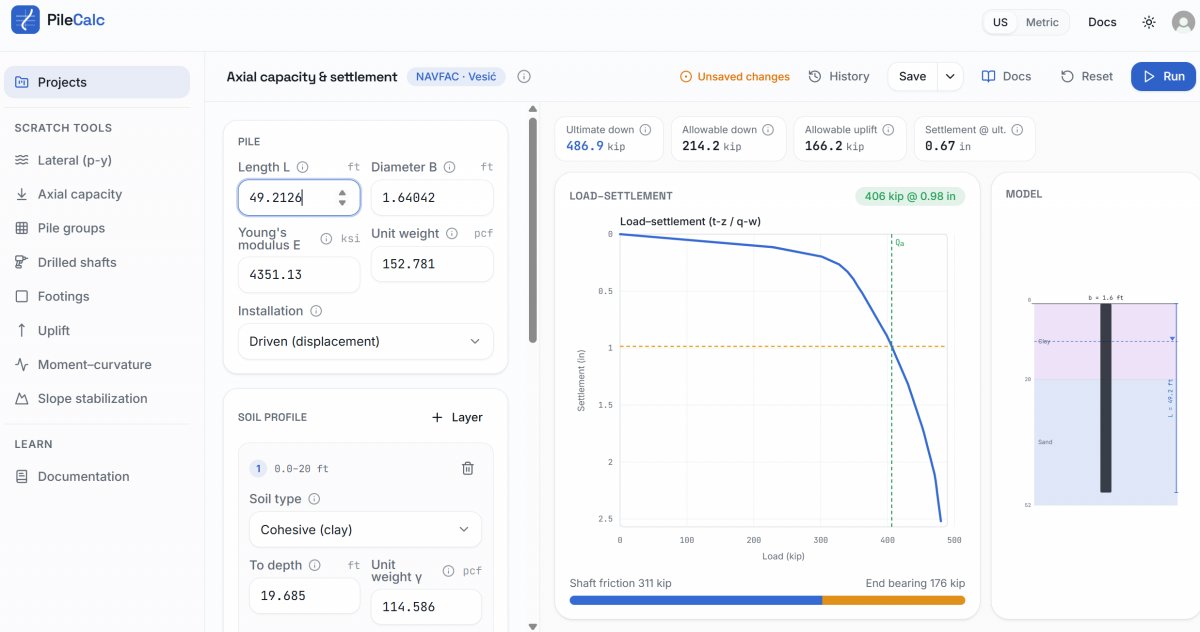
PileCalc is a browser-based geotechnical engineering application for deep-foundation analysis. It includes laterally loaded pile analysis using the FHWA COM624P p-y method, axial pile capacity and settlement, pile groups, drilled shafts, shallow footings, uplift, moment-curvature, and slope-stabilization tools.
The software is intended for civil/geotechnical engineers who need an online alternative to desktop pile-analysis tools such as LPILE, CivilTech AllPile, and Rocscience RSPile. It runs in the browser on Mac, Windows, Linux, and Chromebook with no installation or dongle required.
The desktop incumbents split this across four separate programs. PileCalc puts it in one place — every method documented, every assumption visible. Built on the methods the profession already trusts : FHWA COM624, PReese p-y, NAVFAC DM-7.02, FHWA-IF-99-025, API RP-2A, Vesić (1977)
Deep-foundation toolbox
- Lateral (p-y) : The COM624P p-y finite-difference method — pile inputs, every soil model and parameter, head conditions, and how to read the response.
- Axial capacity : Side friction and end bearing for compression and uplift, the load–settlement curve, and the factors of safety that govern design.
- Capacity vs length : Sweep the embedded length and read off the pile length required for a target axial capacity — the NAVFAC method run at every length.
- Torsion : Florida District 7/CDOT drilled-shaft capacity with explicit toe transfer and calibrated monotonic torque–rotation/depth response.
- Downdrag : FHWA GEC 12 neutral-plane analysis with layer-specific t-z/q-z transfer, pile self-weight, explicit consolidation or measured settlement, load combinations, and convergence evidence.
- Foundation stiffness : Signed reciprocal lateral–rotation tangent stiffness and vertical secant/tangent response at an explicit service state.
- Pile groups : Driven-sand individual-pile group resistance with an equivalent-block diagnostic, USACE sand-group settlement, and lateral row-by-row p-multiplier shadowing.
- Structural pile cap : Saul/USACE CPGA pile-load distribution plus edition-specific AASHTO-2002 cap flexure, one-way shear, punching, and reinforcement checks.
- Drilled shafts : FHWA-IF-99-025 capacity for bored piles: α / β / rock-socket side resistance, base bearing, and belled-base uplift.
- Helical piles : Axial capacity by individual plate bearing vs cylindrical shear, with the per-helix breakdown and the AC358 installation torque.
- Footings : The general bearing-capacity equation with every correction factor, elastic settlement, base sliding, and eccentric tilt.
- Uplift : Shallow and deep breakout capacity for bearing plates and helices, plus grouted ground-anchor bond capacity.
- Moment–curvature : Fiber-integrated M–φ and nonlinear flexural rigidity for solid-circular, pipe, and rectangular steel sections.
- Buckling : First elastic buckling eigenvalue and signed mode of a finite, partially embedded pile on linear Winkler support.
- Slope stabilization : Strict pile-row demand/capacity checks across declared candidate slip surfaces, with explicit distributed demand and convergence evidence.
* PileCalc download link provides trial version of the software.
Deep Foundation and Pile Design
DeepFND is a powerful interactive software for deep foundation and pile design. Axial, lateral, settlement, structural and geotechnical analysis options.
Deep Foundation Analysis and Design Solutions
PileSuite is a powerful suite of software products for deep foundation analysis and design for both onshore and offshore projects.
Open your CAD drawings in all major browsers with the latest DWG FastView online version, no installation or upgrade needed.
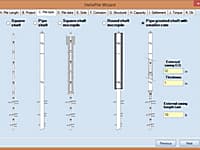
HelixPile is a user friendly, modern and powerful software program for the design of helical piles.
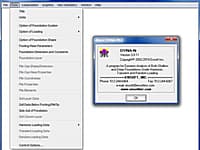
Dynamic Analysis of Shallow and Deep Foundations
DYNAN can be used for the dynamic analysis under transient and random loading in the time domain.
Submit a review about PileCalc software with your social media profile
No comments yet. Be the first to comment.